
FREEPHONE 0800 999 2991
Fire Retardant | Clothing | Everything You Need to Know
Fire Retardant | Clothing | Everything You Need to Know
What is a Fire Retardant?
Flame or fire retardant is the process of either using chemicals or materials that will aid in slowing or preventing the spread of a fire.
Our fire retardant fabric clothing is not flameproof, however, it can be used to smother a fire into extinguishing.
A chemical can be added to flammable materials to prevent or slow down fires and increase the amount of time a victim has to escape.
- How easily does the product ignite?
- How much heat is released when it burns?
- How does the fire spread on a surface?
- The way in which it disintegrates as it burns
- What quantity of smoke is released?
Types of Flame Retardants
Chemical Flame Retardants
Used since the 1970s, “flame retardant” chemicals can be categorised based on chemical structure and properties.
These fire retardation chemicals can be grouped together based on whether they contain bromine, chlorine, phosphorus, nitrogen, metals or boron. Often chemicals are combined to increase the effectiveness.
- Bromine, chlorine, fluorine and iodine are also known as halogens.
- These can be used directly on the core of the fire.
- When using these brominated flame retardants or halogens you are interfering with the chemistry of the flame.
- Although effective, these chemicals can leak into the air and form household dust particles.
Inherent Flame Retardation
- Unlike chemical flame retardants, the inherent flame retardant is an attribute that exists permanently within the fabric.
- Regardless of how many washes the garment has undergone, it will continue to extinguish fires over the course of its life.
- These items tend to be more expensive due to their durability through laundering and are safer for human health.
"Polyester is inherently flame retardant, and therefore doesn't flare up when applied to various tests" (Wiki Fire Retardant Fabrics Source)

Popular Flame Retardant Products
Popular flame retardant items for Online Safety Supplies include our flame retardant coveralls. These provide full-body protection and are often known as boiler suits, overalls or all in ones. The full-body protection has no gaps for sparks and molten splash to get through. We supply boiler suits with pockets, zips, buttons and more to keep the garment tight and prevent flames from touching the skin.

This B Click Flame Retardant Boilersuit is anti-static for use where sparks or electricity is present.
The garment has two breast pockets for storage, retro-reflective tape for visibility and safety standard protection for use in welding.
Along with the breast pockets, this item has two hip pockets, one rear hip pocket flap and a half elasticated waist.
- Flame retardant/Anti-static
- FR retro-reflective tape. (Nordic Design)
- Concealed zip front to neck
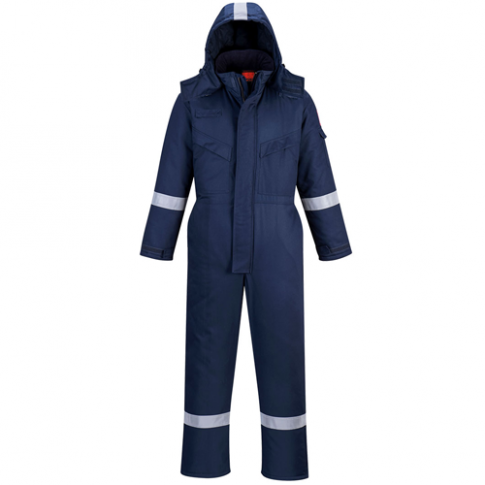
This inherent fire retardant coverall is highly insulated and anti-static.
The ARC3 rating offers outstanding protection against electric arc.
Designed for harsh winter conditions, this style is hard-wearing and very comfortable.
Features include a detachable hood, two-tier knee pad pockets, radio loops and multiple pockets.
- Protection against radiant, convective and contact heat
- 10 pockets for ample storage
- EN ISO 11612 A1+A2, B1, C1, F1
- EN ISO 11611 Class 1 A1+A2
- Shell Fabric : 93% Meta-aramid, 5% Para-aramid, 2% Carbon Fibre 200g
- Sew on flame-resistant industrial wash tape
Retardation Mechanisms for Fire Safety
- Endothermic Degradation
- Thermal Shielding
- Consumer Products & Furnishings – This includes carpets, mattresses, curtains, blinds and upholstery.
- Clothing – Flame retardant clothing, boiler suits, flame retardant trousers and jackets all for use where higher risks of molten metal or sparks can occur and injure an individual. “The addition of flame retardants to the material fillings and fibres used in furnishings helps provide individuals with an extra layer of fire protection and can increase critical escape time in case of a fire.” Chemical Safety Facts for Flame Retardants Source
There are a number of different mechanisms which come with flame retardancy and they are completely dependent on whether the additive is reactive to vapour or solid phases of a fire.
Endothermic Degradation is the breakdown of a compound based on high temperatures of thermal energy. This reaction removes the heat from the surface or material leaving the item cooled.
Thermal shielding is the process of creating a thermal insulation barrier between burning and unburned materials. Intumescent (a substance that swells as a result of heat exposure) additives are often used to turn the surface into char. This will then separate the flame from the material and create a protective layer.
"Some flame retardants work to reduce the flammability of items or surfaces in buildings by decreasing the presence of oxygen and gas near items that are burning. Oxygen is needed for a fire to start and spread, so reducing the amount of oxygen around an item means that it will be much harder, or impossible, for it to ignite." (source)
Uses and Benefits
Products Which Flame Retardants are Applied to
Due to the vast benefits of flame retardation products, many everyday objects will be coated in material or chemicals that will slow the spread of fire.
Some examples of flame retardant products include:

Statistics – Decrease in Fatalities, Increase in Incidents
According to UK statistics via statista.com, there were 286 fire-related fatalities in Great Britain during 2019/20. With fatalities having dropped around half since the early 2000s, we can see that the addition of better fire-retardant clothing and health and safety equipment is making an impact. “Since 2011, the number of fatalities related to fire fell below 400 and has remained below 400 since that point.” Statistics Source URL
Although fatalities have dropped, sadly, incidents have continued to increase. “In 2018/19 there were over half a million incidents attended in England, over 92 thousand in Scotland and almost 37 thousand in Wales. Northern Ireland had the least number of incidents attended at around 24.6 thousand.”
Do you Need Flame Retardant Clothing?
Flame Retardation Clothing (FR Clothing) refers to garments that will not easily catch fire. Once a flame retardant clothing item does catch fire, it will self-extinguish and minimise the amount of injury that the wearer’s skin will sustain.
Operating within industries where sparks or flames are by-products of your work can be dangerous. It is important to follow safety precautions and cover your skin with flame retardant clothing. This includes firefighters, electricians, railways, welders and more.
Our flame retardant clothing can be split into chemically treated cotton (probanised cotton) or inherent. When purchasing chemically treated cotton products it is important to note that over time through washing the fabric the chemicals will become less effective. This usually occurs after 25 washes, however, most industries using these products probably won't wash the garment too often.
Contact us if you wish to order products in large quantities as we will be able to offer discounts based on bulk orders.

