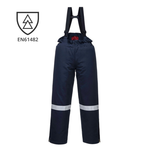
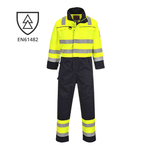
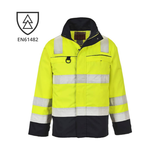
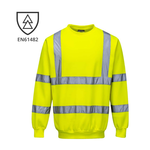
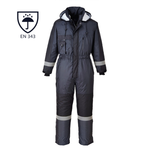
Arc Flash Workwear
Quality Arc Flash protective clothing is our speciality. We are a huge UK Arc workwear supplier based in Derby and we pride ourselves on making sure that you're safe. We won't let you down!
The Dangerous Reality of Arc Flash: What You Need to Know About This Electrifying Hazard
Arc Flash is a serious electrical hazard that can cause serious injury or death. What is Arc Flash? It's a dangerous condition that can occur when an electric current passes through the air. If you work with or around electricity, it's important to know what Arc Flash is and how to protect yourself from it. In this description, we will discuss the dangers of Arc Flash and how to stay safe in the event of an incident.
Arc Flash can occur when there is a sudden release of energy from an electrical circuit. This can happen due to a number of factors, including faulty equipment, damaged insulation, or human error. When Arc Flash occurs, it can cause a bright flash of light and a loud noise. It can also generate heat that can reach temperatures up to 35,000 degrees Fahrenheit. This heat can cause severe burns, and the high voltage can also cause death.
In short, an arc flash is a fault that causes an electrical explosion caused by a connection from air to ground. This explosion produces intense ultra-violet light and high temperatures of around 19,000°C.
Electrical arc flash incidents are among the least understood electrical hazards to date, however, as they become more frequent, development in arc protective clothing becomes more necessary.
Effects of an Arc Flash and the Causes
An arc flash produces enough heat to severely burn anyone working in close proximity, this may even lead to fatalities. Arc flashes are often the result of a short circuit and this could be due to technical failures, poor installation, human error or even simply dust build-up.
Electric arcs can occur whenever there is live electrical equipment. Often when a repair or maintenance is taking place this will create a chance of an arc flash. If equipment cannot be turned off then electricity will continue to flow and this can be extremely dangerous to whoever is within a foot of the power supply.
The results of an arc flash without arc protected clothing are very dangerous to your or your employee's health. Due to extremely high temperatures the results can include causing a fire, severe burns to the body, molten metal fragments or particles moving at high speed etc.
A person without arc PPE can expect to experience injuries including:
- Burns
- Blast Injury
- Lung Damage
- Hearing Loss
- Eyesight Damage
"An arc flash may be caused by a tool, rodent or other elements in a breaker or service area, that could compromise the distance between energized components. Incidents often occur when personnel fails to ensure that the equipment has been properly de-energized." Source
How is Arc Flash Protection Measured?
There are two main ways to measure arc flash: incident energy and arc flash PPE. Incident energy is the amount of heat energy that is released during an arc flash event, while arc flash PPE is the clothing and equipment that workers wear to protect themselves from arc flash hazards.
Incident energy is measured in calories per square centimetre (cal/cm^²). This unit of measurement is used to determine the level of arc flash protection that workers need. The higher the incident energy, the more arc flash PPE workers will need to wear.
There are a variety of arc flash PPE options available on the market today. Some of the most popular arc flash PPE includes arc flash clothing, arc flash gloves, and arc flash glasses.
CAT 1 provides 4 cal/cm² and CAT 4 providing at least 40 cal/cm².
Arc rated categories:
- Arc CAT 1 - >= 4 cal/cm²
- Arc CAT 2 - >= 8 cal/cm²
- Arc CAT 3 - >= 25 cal/cm²
- Arc CAT 4 - >= 40 cal/cm²
"A calorie is the energy required to raise one gram of water one degree Celsius at one atmosphere. The onset of second-degree burns may occur from 1.2 calories/cm2. One calorie/cm2 can be equal to holding your finger over the tip of a flame of a cigarette lighter for one second." (source)
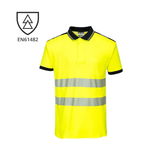
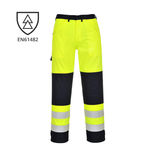
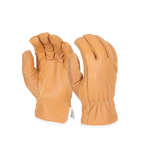
Increased awareness of arc flash protection has allowed us to provide protective equipment such as boilersuits, overalls, boots, gloves, jackets and more. These are flashes supply enough energy to cause substantial damage.
Industries that Require Arc Flash Clothing
Industries that require quality arc flash clothing are those where there is a risk of electrical shock. This can include industries such as construction, manufacturing, and utilities. Arc flash clothing is designed to protect workers from the dangers of electric shocks. It is made with materials that are resistant to electricity, and it often features flame-resistant insulation. Workers in industries that require arc flash clothing should always wear the appropriate gear to protect themselves from potential injuries.
- All arc protected clothing is also fire retardant.
- Automotive Industry.
- Rail Industry
- Construction Industry.
- Utilities Industry.
- Electricians.
- Data Centres.
- Manufacturing.
- Anyone Who Works with High Voltage Electricals.
How do I select the correct arc work clothing?
Arc flash clothing is the last form of defence when conducting your electrical safety plan, however, it is arguably one of the more important steps. Protecting your employees is crucial, especially if they conduct their work in remote areas such as working on power generators.
There are several steps you can take to protect yourself from Arc Flash. First, always wear appropriate safety gear, including flame-resistant clothing and a face shield. Make sure all equipment is properly insulated and in good working condition. Never work on a live circuit, and always be aware of your surroundings. If you see an Arc Flash incident happening, take cover and evacuate the area immediately.
How to Perform an Arc Flash Study?
Arc flash studies are performed to determine the potential arc flash hazard at a specific location within an electrical system. The study will identify the arc flash boundary, the incident energy exposure level, and the personal protective equipment (PPE) required for safe work conditions. This information is used to develop safe work procedures and train employees on the hazards associated with arc flash incidents.
- There are four steps to performing an arc flash study:
- Identify the arc flash hazard potential
- Measure the incident energy exposure levels
- Determine the arc flash boundary
- Develop safe work procedures and train employees on the hazards associated with arc flash incidents.
Step one is to identify the arc flash hazard potential. This is done by evaluating the electrical system design, equipment ratings, and operating conditions. The results of this evaluation will help to identify the arc flash hazard categories for each location within the electrical system.
Step two is to measure the incident energy exposure levels. This is done by conducting tests on representative samples of electrical equipment. The tests will measure the arc flash energy and determine the incident energy exposure level for each category.
Step three is to determine the arc flash boundary. This is done by evaluating the electrical system design, equipment ratings, and operating conditions. The results of this evaluation will help to identify the arc flash boundary for each location within the electrical system.
Step four is to develop safe work procedures and train employees on the hazards associated with arc flash incidents. This includes developing procedures for safely working within the arc flash boundary, and training employees on the proper use of personal protective equipment (PPE).
An arc flash study is a critical part of ensuring the safety of employees who work in or around electrical systems. By following the four steps outlined above, you can be sure that your employees are working in a safe environment. arc flash studies are performed to determine the potential arc flash hazard at a specific location within an electrical system. The study will identify the arc flash boundary, the incident energy exposure level, and the personal protective equipment (PPE) required for safe work conditions. This information is used to develop safe work procedures and train employees on the hazards associated with arc flash incidents.